USCG Required Safety Equipment by Boat Length (2026)
The federal carriage rules for fishing boats under 40 feet, by length: life jackets, throwables, distress signals, extinguishers, sound signals, lights and the cut-off switch.
Independently chosen. As an Amazon Associate I earn from qualifying purchases: if you buy through our links, we may earn a commission at no cost to you. How we research
Quick answer
Every boat needs a wearable life jacket per person and a sound signal. At 16 feet you add a throwable, and on coastal waters day as well as night distress signals. Most fishing boats also need a 5-B extinguisher. Buyable picks: a Stearns cushion, a Sirius Signal C-1003 or ACR ResQFlare, a Kidde Mariner 5 and a SeaSense horn.
In this guide
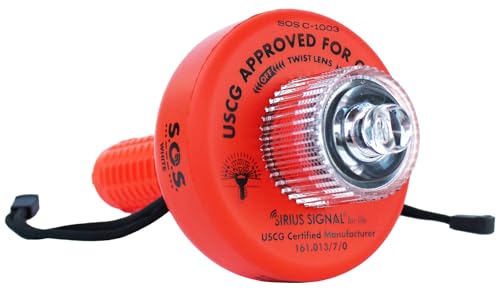
- Day, night and audible in one kitSirius Signal C-1003 SOS LED Distress SignalFrom the listing · not tested
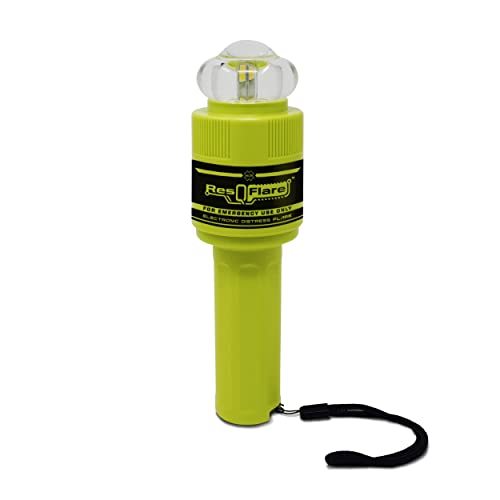
- Replacing flares from the helmACR ResQFlare Electronic Distress Flare and FlagFrom the listing · not tested


A Coast Guard or state boarding officer checks your boat against a short federal list, and most of it depends on length. A 15-foot skiff and a 24-foot center console both need life jackets and a sound signal. The 24-footer also needs a throwable and a full set of distress signals. Here is the list by length, then the pieces most anglers have to buy.
How we chose: we did not test this gear; the rules come from the Coast Guard's own guide and pages, and the picks from listings showing Coast Guard approval, sold by Amazon.com or the maker and in stock on September 29, 2026.
The checklist by boat length
| Requirement | Under 16 ft | 16 ft to under 26 ft | 26 ft to under 40 ft |
|---|---|---|---|
| Wearable life jacket | 1 per person | 1 per person | 1 per person |
| Throwable (Type IV) | Not required | 1 | 1 |
| Visual distress signals (coastal waters) | Night signals, if out between sunset and sunrise | Day and night | Day and night |
| Fire extinguisher (if the boat has closed compartments or fixed tanks) | 1 x 5-B | 1 x 5-B | 2 x 5-B, or 1 with a fixed system |
| Sound signal | "Some other means of making an efficient signal" | Same | Same (a whistle from 39.4 ft) |
| Navigation lights | Sunset to sunrise and in restricted visibility | Same | Same |
| Engine cut-off switch link | Worn on plane, 3+ hp | Worn on plane, 3+ hp | Not required |
Rows one to four and six come from the Coast Guard's Boater's Guide to the Federal Requirements. The sound-signal rule is Rule 33 of the Navigation Rules; the cut-off rule is the Coast Guard's engine cut-off switch page. States can add more.
| Item | Covers | Sold by | Amazon price |
|---|---|---|---|
| Stearns throwable cushion | Throwable | Amazon.com | $21.49 (Amazon, as of Sep 29, 2026, 5:00 PM UTC)Check price |
| Sirius Signal C-1003 | Night signal, day flag, whistle | Sirius Signal | $69.99 (Amazon, as of Sep 29, 2026, 5:00 PM UTC)Check price |
| ACR ResQFlare with flag | Night signal, day flag | ACR Electronics | $79.95 (Amazon, as of Sep 29, 2026, 5:00 PM UTC)Check price |
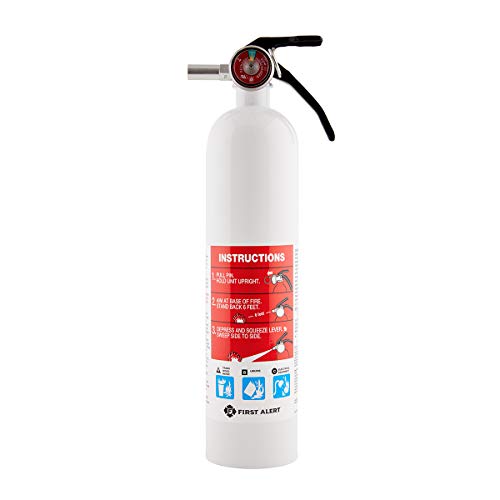
| Kidde Mariner 5 | One 5-B extinguisher | Amazon.com | $25.79 (Amazon, as of Sep 29, 2026, 5:00 PM UTC)Check price |
| First Alert Marine1 | One 5-B extinguisher (rated 10-B) | Amazon.com | $29.98 (Amazon, as of Sep 29, 2026, 5:00 PM UTC)Check price |
| SeaSense air horn | Sound signal | Amazon.com | $22.65 (Amazon, as of Sep 29, 2026, 5:00 PM UTC)Check price |
| SeaSense whistle | Backup sound signal | Amazon.com | $3.14 (Amazon, as of Sep 29, 2026, 5:00 PM UTC)Check price |
Prices are Amazon's, as of the time shown, and subject to change. Details
Life jackets and the throwable
The guide's rule is simple: "All recreational vessels must carry one wearable PFD for each person on board. Any boat 16 feet and longer (except canoes and kayaks) must also carry one throwable PFD (Type IV)." Each must be Coast Guard approved, the right size for its wearer and in good condition.
Stowage counts too. Wearables must be readily accessible, not in plastic bags or locked compartments, and throwables "must be immediately available," within arm's reach on deck. On a boat that is underway, children under 13 must wear theirs unless below deck or in an enclosed cabin.
The Stearns cushion is listed as a Coast Guard-approved Type IV throwable, and as a seat cushion it naturally stays on deck. An inflatable only counts if it is armed; our rearm kit guide covers what the Coast Guard calls serviceable, and our inflatable vs foam guide covers who should wear which.

Visual distress signals: flares or electronic
On coastal waters, the Great Lakes and connected waters until they narrow below two nautical miles, the guide requires Coast Guard-approved visual distress signals. Boats under 16 feet only need night signals when out between sunset and sunrise, but the guide recommends carrying signals anywhere.
Pyrotechnics must be approved, unexpired and readily accessible: three for day and three for night, or combination flares that count for both. They expire 42 months after manufacture. Orion, the flare maker, says in its marine FAQ that this usually means replacing them every three boating seasons, and never throwing old ones overboard.
The electronic alternative is an eVDSD, and the guide is specific: it is "Acceptable for night use only." For daytime you need an orange distress flag at least 3 x 3 feet, or day flares. So an e-flare alone does not meet the rule on a daytime trip.
Both electronic picks come with the flag. Sirius Signal says the C-1003 "Meets all Visual Distress Signal (VDS) requirements" when paired with its distress flag, and adds a whistle. ACR says the ResQFlare and its flag, "when carried together," replace pyrotechnic flares.

Fire extinguishers and the 2022 rule
The Coast Guard's fire extinguisher FAQ says the current rule took effect on April 20, 2022. Boats of model year 2018 and newer must carry 5-B or 20-B extinguishers with a date stamp. Older boats may keep B-I or B-II units while they stay in good condition.
Disposable extinguishers "must be removed from service" 12 years after the manufacture date stamped on the bottle. A 10-B counts as only one 5-B, and one 20-B can replace two 5-Bs.
The guide requires an extinguisher when a boat has closed compartments where portable tanks may be stored, closed living or storage spaces, double bottoms not sealed or filled with flotation, or permanently installed fuel tanks. It must be marine type, Coast Guard approved and "provided with a mounting bracket."
Before each trip, the guide says, check seals and tamper indicators, the gauge, and for damage, rust or clogged nozzles. The Kidde Mariner 5 is a 5-B:C disposable approved with its included strap bracket. The First Alert Marine1 is rechargeable and rated 1-A:10-B:C, so it covers fabric and wood fires but counts as one 5-B.
Sound signals
Rule 33 says a vessel under 12 meters (39.4 feet) is not obliged to carry a whistle or bell, but "shall be provided with some other means of making an efficient signal." The guide adds that recreational boats must sound signals when meeting, crossing and overtaking, in reduced visibility and at anchor.
A built-in horn does the job; otherwise carry a can horn and a whistle. SeaSense says its 3.5 oz horn meets EPA and Coast Guard standards. The guide also calls a whistle "a good idea" to keep with each wearable life jacket.

Lights, ventilation and the cut-off switch
The guide requires navigation lights from sunset to sunrise and in restricted visibility. Under the Navigation Rules, a power-driven boat under 12 meters may show an all-round white light and sidelights instead of a masthead light, sidelights and sternlight. Check the bulbs before a dawn launch.
Gasoline boats also need ventilation, and inboard gas engines a backfire flame arrestor, per the guide. Outboards are exempt from the arrestor rule.
On boats under 26 feet with an engine cut-off switch and about 3 hp or more, the operator must wear the link on plane; our kill switch guide covers the details. Offshore, the guide suggests going beyond the minimum with a VHF radio, an EPIRB or personal locator beacon, and GPS.
Related: marine first aid kits, which no federal rule requires but every boat should carry.
What we left out
Orion's pyrotechnic flare kits were on Amazon only from third-party sellers when we checked, and so were the ring buoys from Jim-Buoy and Mustang Survival; none is linked. We found no recalls of Kidde, First Alert, Stearns, Sirius Signal, ACR or SeaSense products since 2023 in the CPSC recall database; our recall page tracks marine recalls.
The products in this guide
In the order this guide discusses them, from listings, certifications and standards. Where a price appears it is Amazon's, with the time it was read.
Head to head: Onyx vs Stearns Life Jackets (2026)The throwable for boats 16 ft+
Stearns Throwable Flotation Cushion
From the listing · not testedBuy it if your boat is 16 feet or longer and has no throwable yet.
Pros
- + U.S. Coast Guard-approved Type IV throwable, per the listing
- + 1 in webbing straps to hold or throw it; 16 x 14 in
- + Doubles as a seat cushion, so it rides on deck where you can reach it
Cons
- - A cushion floats the person holding it; it is not a wearable life jacket
Day, night and audible in one kit
Sirius Signal C-1003 SOS LED Distress Signal
From the listing · not testedBuy it if you want to stop replacing flares and keep day, night and whistle together.
Pros
- + Electronic SOS light built to 46 CFR 161.013, with an orange day flag and a whistle, per Sirius Signal
- + Flashes SOS for up to 60 hours; batteries included, per the listing
- + Nothing to expire the way pyrotechnic flares do
Cons
- - The light alone is a night signal; the flag has to stay in the kit for daytime
Replacing flares from the helm
ACR ResQFlare Electronic Distress Flare and Flag
From the listing · not testedBuy it if you already carry a whistle or horn and want a self-righting e-flare.
Pros
- + Certified under 46 CFR 161.013 as a night signal; the included flag is certified as a day signal, per ACR
- + Floats and rights itself; IP67; 20 hours of operation, per the listing
Cons
- - C-cell batteries not included; no whistle in the box

The 5-B for boats under 26 ft
Kidde Mariner 5 Fire Extinguisher, 5-B:C
From the listing · not testedBuy it if your boat needs one 5-B extinguisher and you want the smallest that qualifies.
Pros
- + Coast Guard approved with its plastic strap bracket, which is included, per the listing
- + 5-B:C rating; 2 lb of sodium bicarbonate; aluminum and stainless components
- + Pressure gauge that reads green when charged
Cons
- - Disposable, so it leaves service 12 years after its manufacture date
Cabin boats with bedding and wood
First Alert Marine1 Fire Extinguisher, 1-A:10-B:C
From the listing · not testedBuy it if you want a Class A rating too and your boat has a cabin.
Pros
- + Rated 1-A:10-B:C, so it also covers wood, paper and fabric fires, per the listing
- + Rechargeable by a certified professional; metal valve and gauge
- + Coast Guard approved when used with the included bracket, per the listing
Cons
- - Counts as one 5-B toward the carriage rule, not two

The sound signal
SeaSense Air Horn, 3.5 oz
From the listing · not testedBuy it if your boat has no built-in horn.
Pros
- + 118 dB with a 1 mile range and a push-button top, per the listing
- + SeaSense says it meets EPA and Coast Guard standards
Cons
- - A can empties; keep a whistle as a backup

Backup sound signal
SeaSense Safety Whistle
From the listing · not testedBuy it for each life jacket and one for the console.
Pros
- + Orange molded plastic with a stainless split ring and lanyard, per the listing
Cons
- - The listing gives no loudness figure
Frequently Asked Questions
Can I keep my expired fire extinguisher aboard as a spare?
Yes. The Coast Guard's fire extinguisher FAQ says there is no prohibition on keeping an old one aboard, as long as you also carry newer ones that meet every requirement and are readily accessible.
Do expired flares still count?
Not toward the requirement. The Coast Guard's guide says expired signals may be carried as extra equipment but cannot be counted toward the visual distress signal rule.
Does a white strobe light count as a distress signal?
Not for the carriage rule. The guide says a high-intensity white light flashing 50 to 70 times a minute is a distress signal under the Inland Rules, but such devices "do not meet the Visual Distress Signal carriage requirement."
Does a kayak or canoe need distress signals?
Only at night on coastal waters. The guide lists manually propelled boats among those that need no day signals but must carry night signals between sunset and sunrise; canoes and kayaks are also exempt from the throwable.
Proof
Sources
Everything this guide relies on, as linked in the text. Last checked September 29, 2026.
- U.S. Coast Guard Boating Safety: Boater's Guide to the Federal Requirements
- U.S. Coast Guard Navigation Center: Rule 33 of the Navigation Rules
- U.S. Coast Guard Boating Safety: Engine cut off devices.php
- orionsignals.com: Marine faq
- siriussignal.com: Sirius Signal
- acrartex.com: Resqflare boat flare
- U.S. Coast Guard Boating Safety: Fire extinguisher faq.php
- U.S. Consumer Product Safety Commission: CPSC recall database
SaltProofLab is a participant in the Amazon Services LLC Associates Program, an affiliate advertising program designed to provide a means for sites to earn advertising fees by advertising and linking to Amazon.com.
Amazon prices and availability change often; cards with a live Amazon price show when it was last checked. As an Amazon Associate I earn from qualifying purchases.