AIS Man Overboard Beacons vs PLBs (2026)
An AIS MOB beacon alerts your own boat and nearby AIS sets; a PLB reaches the rescue satellites. What each does per the Coast Guard, and what to register.
Independently chosen. As an Amazon Associate I earn from qualifying purchases: if you buy through our links, we may earn a commission at no cost to you. How we research
Quick answer
If you fish with crew who can turn the boat around, the Ocean Signal rescueME MOB1 puts your position on their chartplotter and fires their DSC radio alarm within seconds. If you fish alone, it can't help you; carry a PLB such as the rescueME PLB1, which reaches the rescue satellites.
In this guide
- Crewed boats with AIS and DSCOcean Signal rescueME MOB1 AIS Man Overboard DeviceFrom the listing · not tested
- Solo anglers and kayakersOcean Signal rescueME PLB1 Personal Locator BeaconFrom the listing · not tested



Offshore anglers who run with a mate, and sailors who stand night watches, keep hearing about AIS man overboard beacons as the cheaper, faster alternative to a PLB. They are not the same thing. An AIS MOB beacon calls the boat you just fell off and any boat within a few miles; a PLB calls the rescue satellites. Which one you need depends on who is left aboard.
How we chose: we did not test these devices; we read the Coast Guard's AIS guidance and Ocean Signal's product pages and picked beacons sold by ACR Electronics (Ocean Signal's parent group) and in stock on September 30, 2026.
MOB beacon and PLB side by side
| Device | Who gets the alert | Range or coverage | Registration | Sold by | Amazon price |
|---|---|---|---|---|---|
| Ocean Signal rescueME MOB1 | AIS sets and plotters nearby; your boat's DSC radio | Up to 5 miles, per Ocean Signal | None; factory ID starting 97260 | ACR Electronics | $384.95 (Amazon, as of Sep 30, 2026, 1:44 PM UTC)Check price |
| Ocean Signal rescueME PLB1 | Search and rescue satellites | Worldwide | Required with NOAA | ACR Electronics | $399.95 (Amazon, as of Sep 30, 2026, 1:44 PM UTC)Check price |
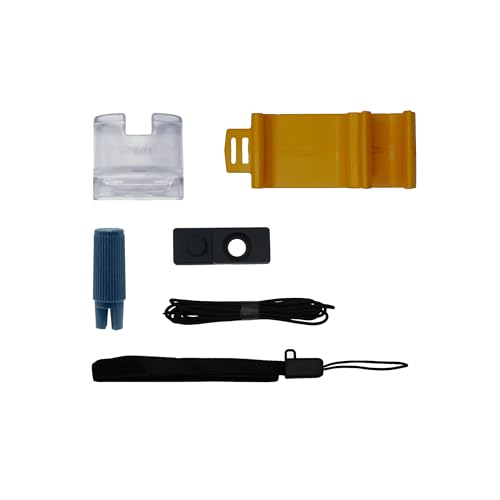
| MOB1 Fittings Pack | n/a | n/a | n/a | ACR Electronics | $19.99 (Amazon, as of Sep 30, 2026, 1:45 PM UTC)Check price |
Prices are Amazon's, as of the time shown, and subject to change. Details
What an AIS MOB beacon does
When the MOB1 goes off, Ocean Signal says it transmits an alert "to the vessel you have been separated from and other vessels in the vicinity (up to 5 miles range dependent on conditions)." The alert appears as a man overboard target on any AIS receiver or AIS-equipped chartplotter in range, with your GPS position updating as you drift.
Fitted inside an inflatable life jacket, the MOB1 "will activate automatically on inflation, sending the first alert within 15 seconds," per Ocean Signal. It also carries a DSC transmitter. You program your own boat's MMSI into it, and the beacon sends its DSC distress call to that number, so your VHF sounds its alarm even if nobody is watching the plotter.

What the Coast Guard says about AIS alerts
This is the part the marketing leaves out. The Coast Guard's AIS frequently asked questions say AIS locating devices, "i.e. AIS MOB devices," are "not currently monitored or acted upon" as distress alerts "by the Coast Guard Rescue 21 or other maritime search and rescue authorities or systems."
The same page says AIS "should not be relied upon as the primary means for broadcasting distress or urgent communications." It tells anyone shopping for a MOB or PLB device to check its mode of operation: DSC-only alerting, AIS-only, dual AIS and DSC, or a private network.
In practice, an AIS MOB alert is a message to boats, not to rescuers. It works when someone on your boat, or on one close by, sees it and turns around.
Key point: if you fish alone, nobody is left aboard to read the plotter. That is the case for a PLB, not a MOB beacon.
What a PLB does instead
A PLB sends a 406 MHz signal to the international search and rescue satellites, and the alert goes to rescue authorities. Ocean Signal's MOB1 page says as much: to alert rescue authorities, its rescueME PLB1 "communicates directly via a dedicated search and rescue satellite network."
The trade-off is the first minutes. A PLB has to be switched on by hand, and help comes from shore. A MOB beacon fires by itself when the jacket inflates, and the help is the boat you were on. Our personal locator beacon guide covers the PLBs, EPIRBs and Return Link Service in detail.
Registration: NOAA for a PLB, nothing for the MOB1
The Coast Guard's Boater's Guide to the Federal Requirements says 406 MHz EPIRBs and PLBs "must be properly registered with NOAA." You do that online at the National Beacon Registration Database.
An AIS MOB beacon is different. Ocean Signal says all its AIS and DSC MOBs are "pre programmed at the time of manufacture with the self identification MMSI number," which for the MOB1 always starts 97260. You don't register that number; Ocean Signal only offers optional product registration to extend the warranty.
What the MOB1 does need is your boat's DSC MMSI, if you want the DSC alarm. The Coast Guard guide says recreational boaters can get an MMSI through groups such as BoatUS and America's Boating Club.

Fitting and testing a MOB1
Ocean Signal says the MOB1 can be fired by hand or automatically when installed in an inflatable life jacket, using the included clip on the oral inflation tube. It recommends checking with the life jacket's maker before fitting it. Our inflatable vs foam life jacket guide covers which jackets inflate on their own.
Test it the maker's way. Ocean Signal lists three self-tests: a functional test monthly, a DSC test no more than twice a year, and an AIS/GPS test no more than three times a year. Before relying on it, confirm your plotter and VHF handle MOB messages; Ocean Signal says most modern AIS plotters and DSC radios do, but older sets may not.
Which one to carry
Buy the MOB1 if you fish or sail with crew, the boat has an AIS receiver or AIS plotter, and a DSC radio. It turns the most common overboard, off a moving boat with people still aboard, into a position on their screen within seconds.
Buy a PLB1 or another PLB if you fish alone, paddle, or want an alert that reaches rescuers. Many offshore crews wear both. Add the fittings pack only if you're moving a MOB1 to a new jacket.
ACR's AISLink MOB is the other AIS MOB beacon in this group, but no trusted seller had it on Amazon when we checked.
Related: handheld VHF radios with DSC, waterproof headlamps for night trips, and the engine cut-off switch rule that stops the boat when the operator goes over.
The products in this guide
In the order this guide discusses them, from listings, certifications and standards. Where a price appears it is Amazon's, with the time it was read.
Crewed boats with AIS and DSC
Ocean Signal rescueME MOB1 AIS Man Overboard Device
From the listing · not testedBuy it if someone aboard can turn back for you and the boat has AIS.
Pros
- + Sends an AIS alert and position to AIS receivers and chartplotters in the area, per the listing
- + Activates automatically when fitted in an inflatable life jacket, first alert within 15 seconds, per Ocean Signal
- + 7-year battery, 24+ hours of operation, rated to a depth of 10 m and 92 g, per Ocean Signal
Cons
- - Does not alert rescue authorities; Ocean Signal points to its PLB for that
Solo anglers and kayakers
Ocean Signal rescueME PLB1 Personal Locator Beacon
From the listing · not testedBuy it if nobody else would see an alert on a plotter.
Pros
- + Alerts the international rescue satellite system, no subscription, per the listing
- + About 4 oz, 66-channel GPS and a strobe, per the listing
- + 7-year battery and 24+ hours of operation
Cons
- - Switched on by hand, and it floats only in its optional pouch, per Ocean Signal
Refitting a MOB1 to a new jacket
Ocean Signal MOB1 Fittings Pack
From the listing · not testedBuy it if you're moving a MOB1 between life jackets or rearming one.
Pros
- + Activation slider cover, oral-tube bracket, antenna rewind tool, programming adaptor and activation tape, per the listing
- + Genuine Ocean Signal part for the MOB1 (740S-01551)
Cons
- - Fits the MOB1 only
Frequently Asked Questions
Can I use an AIS MOB beacon instead of a PLB?
Not as your only beacon if you fish alone. The MOB1 reaches boats within about 5 miles, per Ocean Signal, and the Coast Guard does not act on AIS MOB alerts. A PLB reaches the satellite system and, through it, rescue authorities anywhere.
Will my handheld VHF show a MOB alert?
Only if it is a DSC radio with your MMSI programmed into the MOB1, and it is on. Ocean Signal's FAQ lists DSC radios it has confirmed, and says to check older equipment with its maker.
How long does a MOB1 run once it goes off?
Ocean Signal rates it for more than 24 hours of operation, including at -20°C, with a 7-year battery life in storage. It also has a strobe for the final approach.
Do I need a radio license to carry these?
Usually not. The Coast Guard guide says the FCC does not require most recreational operators to have an individual license for VHF-FM radios, EPIRBs or radar, though they must follow the FCC's procedures. Some larger or foreign-going recreational vessels may need one.
Proof
Sources
Everything this guide relies on, as linked in the text. Last checked October 1, 2026.
- oceansignal.com: Ocean Signal's parent group
- oceansignal.com: Ocean Signal's MOB1 page
- U.S. Coast Guard Navigation Center: AIS frequently asked questions
- U.S. Coast Guard Boating Safety: Boater's Guide to the Federal Requirements
- National Oceanic and Atmospheric Administration: National Beacon Registration Database
SaltProofLab is a participant in the Amazon Services LLC Associates Program, an affiliate advertising program designed to provide a means for sites to earn advertising fees by advertising and linking to Amazon.com.
Amazon prices and availability change often; cards with a live Amazon price show when it was last checked. As an Amazon Associate I earn from qualifying purchases.

