Winter Boat Storage Checklist (2026): Engine, Battery, Fuel and Cover
A winter boat storage checklist in order: the fuel, flushing and fogging the engine, the battery and a vented cover, with the Coast Guard's own steps.
Independently chosen. As an Amazon Associate I earn from qualifying purchases: if you buy through our links, we may earn a commission at no cost to you. How we research
Quick answer
Order for winter storage: stabilize the fuel and run it through, flush and drain the engine, fog the cylinders, pull or maintain the battery, then cover the boat with ventilation. The Coast Guard says poor winterization is a regular cause of sunken boats and oil spills at marinas.
In this guide
3 picks View product photos on AmazonThe fuel tank over winterSTA-BIL Storage Fuel Stabilizer, 16 ozFrom the listing · not tested$11.99 Amazon price as of Nov 27, 2026, 5:06 AM UTC (details)
 View product photos on AmazonCylinders after the last runSTA-BIL Fogging Oil, 12 ozFrom the listing · not tested$4.99 Amazon price as of Nov 27, 2026, 5:06 AM UTC (details)
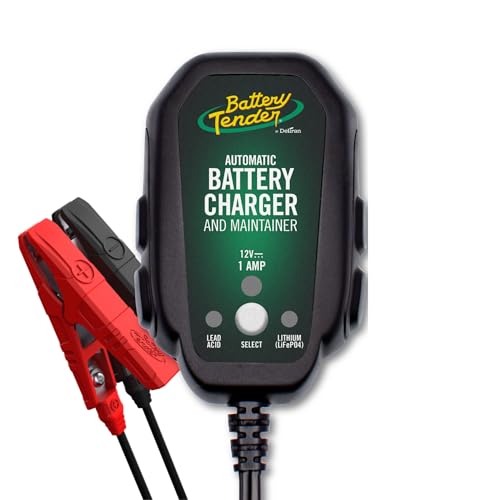 View product photos on AmazonA battery left in the boatBattery Tender Junior 12V, 800mA Charger and MaintainerFrom the listing · not tested$39.95 Amazon price as of Nov 27, 2026, 5:07 AM UTC (details)

Winter storage is a single afternoon of work that decides whether spring starts with a turn of the key or a visit to a mechanic. The order matters: fuel first, then the engine while it is still warm, then the battery and the cover. The steps below follow that sequence, with the checks the Coast Guard and BoatUS's winterizing guide name, and the products from our guides that do each job.
How we chose: we did not test these products. Each comes from one of our guides with the facts from the maker's listing, and on November 16, 2026 every one was in stock and sold by Amazon.com or the brand's own store. The procedure is not our own: it follows the Coast Guard's winterization bulletin and Virginia's wildlife agency, which reprints BoatUS's winterizing advice.
The winter boat storage checklist, step by step
| Step | What it means | Why it matters | The pick for it | Amazon price |
|---|---|---|---|---|
| 1. Stabilize the fuel | Add stabilizer, then run the engine so treated fuel circulates | Untreated gasoline degrades in storage | STA-BIL Storage | $11.99 (Amazon, as of Nov 27, 2026, 5:06 AM UTC)Check price |
| 2. Flush the engine | Run it on fresh water through muffs, then drain | Salt, silt and sand sit in the water passages | Five Oceans muffs | $36.90 (Amazon, as of Nov 27, 2026, 5:07 AM UTC)Check price |
| 3. Fog the cylinders | Coat the internals before the engine sits | Bare metal in a damp engine corrodes | STA-BIL Fogging Oil | $4.99 (Amazon, as of Nov 27, 2026, 5:06 AM UTC)Check price |
| 4. Deal with the battery | Maintain it in place, or pull it and keep it charged | A stored battery loses charge and can freeze when flat | Battery Tender Junior | $39.95 (Amazon, as of Nov 27, 2026, 5:07 AM UTC)Check price |
| 5. Cover with airflow | A cover that sheds water but vents air | Trapped moisture is what grows mildew | FOCEAN 16-18 ft cover | $104.99 (Amazon, as of Nov 27, 2026, 5:08 AM UTC)Check price |
| 6. Dry the cabin | Hang a moisture absorber in a closed boat | Condensation forms on every cold night | DampRid 6-pack | $39.99 (Amazon, as of Nov 27, 2026, 5:07 AM UTC)Check price |
Prices are Amazon's, as of the time shown, and subject to change. Details
Prices are Amazon's on the day we checked them.
How do you winterize a boat motor without a mechanic?
Two things break a stored engine: water left in the cooling passages and bare metal left open to damp air. BoatUS's advice, reprinted by the Virginia Department of Wildlife Resources, starts with why: freshwater "expands in volume by about 9% when it freezes and can push outward with a force of tens of thousands of pounds per square inch."
An outboard on a trailer is the easy case. Hook up muffs, run the engine on fresh water to push out salt and silt, then fog the cylinders by whatever method the owner's manual names. The Five Oceans muffs are a rectangular dual-feed set that connects to a garden hose, with a bracket that clamps over the intakes. Our boat and gear wash guide covers the flushing step in more detail, including how long to run the engine.
Fogging is the step owners skip. STA-BIL's fogging oil is a 12 oz aerosol that the listing says coats internal components, displaces moisture from metal and lubricates cylinders against scuffing at start-up. Follow the manual's port and duration; a can sprayed into the wrong place does nothing for the cylinders.

Should the fuel tank be full or empty for winter?
BoatUS's answer, in the same winterizing guide, is that a built-in gasoline tank should be left "nearly full, with a little room for expansion." The reason is condensation: boat fuel systems vent to the air, so a half-empty tank breathes in humid air and water droplets form on the tank walls. A portable tank is the exception, and is better drained.
Ethanol is the second half of the problem. Boat fuel can contain up to 10% ethanol, which absorbs moisture; when too much water gets in, the ethanol and water separate out and settle on the bottom of the tank. The same guide is blunt about the result: "once fuel becomes phase separated, no amount of additives or fuel stabilizers can help," and the tank then needs a professional drain.
That is the argument for treating fuel before storage rather than in spring. STA-BIL Storage is the stabilizer here; its listing says 16 oz treats 40 gallons and keeps fuel fresh for up to 24 months, which is the same off-season window our reel care guide puts the annual service in. Add it to the tank, then run the engine long enough for treated fuel to reach the carburetors or injectors.
One warning from the same guide: never plug a fuel vent, "as it can rupture the fuel system."

Where does the battery go for the winter?
The Coast Guard's winterization bulletin puts it plainly for boaters staying or going: "we encourage you to disconnect your batteries, shut and lock all doors and windows, and secure all covers." Disconnecting removes the slow drain from accessories and alarms; it does not stop a lead-acid battery from losing charge on its own.
Two ways to handle that. Pull the battery, store it where it will not freeze, and top it up with a maintainer once a month. Or leave it aboard on a maintainer, which is what the Battery Tender Junior is for: 800mA, switchable between lead-acid and lithium LiFePO4, ETL certified and covered by a 5-year warranty, per the listing. It is a maintainer rather than a charger, so a battery that is already flat needs charging first.
Whichever you choose, clean the terminals and check the date. A five-year-old battery in November is one to replace in spring, not to nurse all winter.
Boat cover winter storage: vented or sealed?
A cover has two jobs that pull against each other: shed rain and snow, and let moisture out. The Coast Guard bulletin treats sealing as a safety matter, since "sealing the vessel is extremely important in preventing capsizing due to heavy rainfall or icing," and it names shrink wrapping as one option.
A fabric cover does the same job with a different trade-off. The FOCEAN 16-18 ft cover uses reinforced 1200D panels at the bow, stern and corners over a lighter main fabric, with rear air vents, an elastic hem and tie-down straps, per the listing. Vents are the part to look for: without them the underside of a cover stays wet, and a wet boat grows mildew through the winter.
Fit is where covers go wrong. This one is cut for a 16 to 18 ft V-hull, fish-and-ski or bass boat, so it is the wrong shape for a jon boat or a center console whatever the length. Measure the boat's length and beam first, and check which hull shape the listing names.
The Coast Guard bulletin adds one more caution that applies to any cover: heat lamps used to keep a covered boat above freezing "pose a potential fire danger" from the wrong size, poor grounding or placement near flammables. BoatUS's winterizing basics and its list of winterizing mistakes are further reading before you plug anything in.

What does a yard or marina miss?
Hiring the work does not end the checklist. The Coast Guard's bulletin exists because "the Coast Guard frequently responds to sunken vessels and oil discharges at marinas due to poor winterization," and a yard that winterizes twenty boats in a week can still leave a plug out or a clamp loose.

Walk the boat yourself before the cover goes on. Check the drain plug, the through-hulls and the scuppers. Empty the bilge, because standing water finds every crack when it freezes. Strip the gear you do not want stored damp: life jackets, fire extinguishers, first aid kits and any soft goods, which the bulletin lists under removing excess gear.
Our USCG required equipment guide is the list to check the safety gear against, and dry boxes for boats is where to keep papers and small gear over the winter. Rods come home with you: our rod and guide care guide covers storing them upright and checking guide inserts before spring.
If the boat stays in the water, the list is shorter but not smaller: double up the mooring lines, confirm the bilge pump and its float switch, and check the boat after every storm. Ice and snow load sink boats that were fine in October.
When is it too late to winterize?
It is too late when the first hard freeze arrives, which is why the guidance turns up every fall. Two deadlines are worth pinning to the calendar.
The first is insurance. Virginia DWR's reprint of the BoatUS guidance notes that coverage for ice and freeze damage is often excluded from marine policies unless it is added, and that most insurers stop offering that coverage once temperatures drop, usually at the end of October. Read the policy before the yard does the work, not after.
The second is fuel. Stabilizer needs to circulate while the engine still runs, and an engine that will not start in December cannot be fogged. If the boat is frozen in, drain what you can and plan a spring service.
Frequently Asked Questions
Does a four-stroke outboard need fogging oil?
Follow the owner's manual for your engine rather than a generic routine. Fogging protects cylinders from corrosion in storage, and the manual names the port and method; a dealer can do it if the manual is unclear.
Can I skip winterizing if the boat is stored indoors?
No. Indoor storage slows condensation but does not stop it, and an unheated building still freezes. Virginia DWR's reprint of the BoatUS guidance notes that even a temperate state and a few weeks off the water are not reasons to skip it.
How much fuel stabilizer does a tank need?
STA-BIL's listing gives one ratio for its 16 oz bottle: 40 gallons. Measure the tank from the boat's specifications, not the gauge, and add the dose before the last run.
Should I shrink wrap or use a fabric cover?
Both work if water can run off and air can move. Shrink wrap is what the Coast Guard bulletin names, and it needs a vented frame and a drain; a fabric cover with vents is the cheaper repeat option. What neither fixes is water held in the bilge.
What breaks most often after a winter ashore?
Water left in the cooling system, a battery left connected, and a cover that trapped moisture. The first is the expensive one, because a cracked block or manifold is a replacement rather than a repair.
Proof
Sources
Everything this guide relies on, as linked in the text. Last checked November 16, 2026.
- dwr.virginia.gov: Virginia Department of Wildlife Resources
- content.govdelivery.com: Coast Guard's bulletin
- boatus.com: Boat winterizing basics
- boatus.com: Winterizing mistakes
SaltProofLab is a participant in the Amazon Services LLC Associates Program, an affiliate advertising program designed to provide a means for sites to earn advertising fees by advertising and linking to Amazon.com. Prices change often; the price on the listing at checkout is the one that counts.
Shop on Amazon
Quick searches, tagged so you support the site at no extra cost.
As an Amazon Associate I earn from qualifying purchases.


