Cold-Water Wading Safety: What to Wear and What to Check (2026)
Cold-water wading safety for surf and flats anglers: the layers that buy time, how a wading belt goes on, and the checks to make before you step in.
Independently chosen. As an Amazon Associate I earn from qualifying purchases: if you buy through our links, we may earn a commission at no cost to you. How we research
Quick answer
For cold-water wading, wear neoprene or layered waders with a wading belt cinched at the waist, a warm layer over them, neoprene gloves and socks, and carry a third point of contact. The National Weather Service says cold shock can be as dangerous at 50-60°F as at 35°F.
In this guide
3 picks View product photos on AmazonCold surf with boots attachedFROGG TOGGS Amphib Neoprene Bootfoot Chest Wader, CleatedFrom the listing · not tested$92.29 Amazon price as of Nov 27, 2026, 5:06 AM UTC (details)
 View product photos on AmazonBreathable waders with a beltSimms Tributary Stockingfoot Waders, Basalt, L 9-11 RegularFrom the listing · not tested$279.95 Amazon price as of Nov 27, 2026, 5:08 AM UTC (details)
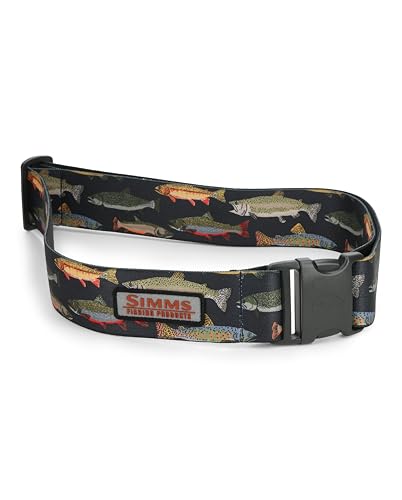 View product photos on AmazonA wide belt over neopreneSimms Wading Belt, 2 inFrom the listing · not tested$36.00 Amazon price as of Nov 27, 2026, 5:08 AM UTC (details)

Cold water does not care how well you cast. The first minute after a fall is decided by what you are wearing and whether you have a plan, not by experience. What follows is the clothing and the checks a surf, jetty or flats angler can act on, with the source for each safety claim.
How we chose: we did not test these products. Each comes from one of our guides with the facts from the maker's listing, and on November 16, 2026 every one was in stock and sold by Amazon.com or the brand's own store. The safety guidance comes from the National Weather Service, the Coast Guard and Virginia's wildlife agency, linked where each claim appears.
How cold is too cold to wade?
The National Weather Service's cold water page answers this in a way that surprises people: "Cold shock can be just as severe and dangerous from water temperatures of 50-60°F (10-15°C) as it is from water at 35°F (2°C)." A warm afternoon does not make a cold ocean safe, and the weather service notes that ocean temperatures in the Pacific Northwest can stay in the sixties all year.
For an angler, the line is not a number but a combination. Water under about 60°F, a boat wake or a dumping wave, and a walk over uneven bottom are the conditions to treat as cold-water wading, whatever the air temperature says. Check the water temperature before you go: NOAA's marine forecasts and the surf reports carry it.
What does cold water do in the first minute?
Three things happen in sequence, and the weather service's page names each one. Cold shock comes first: involuntary gasping, rapid breathing and a spike in heart rate and blood pressure, which "occurs during the first 2-3 minutes or more." Gasping or rapid breathing "can be triggered by water as warm as 77°F (25°C)."
Then physical incapacitation, which the same page calls "a loss of muscular control in the arms, legs, hands and feet," felt within seconds and worse the colder the water. That is the stage that stops a swimmer reaching a rod or a rock. Hypothermia follows, beginning when core temperature drops to 95°F (35°C).
The Coast Guard Auxiliary puts the same warning in plainer terms in its cold water safety guidance: water temperatures at 70°F or below can cause hypothermia. The weather service adds the one item that changes the odds: "Wearing a life jacket significantly increases chances of survival."

What should you wear for cold-water wading?
Dress for the water and the fall, not the air. The winter surf fishing gear that matters is three layers: a wader that keeps water out, a warm layer over it that insulates when damp, and a belt that limits how much water gets in when the first two fail.
| Gear | What it does | The spec, per the maker | Amazon price |
|---|---|---|---|
| Frogg Toggs Amphib neoprene wader | Insulates while wet, boots attached | 3.5 mm neoprene, 200 g Thinsulate boots | $92.29 (Amazon, as of Nov 27, 2026, 5:06 AM UTC)Check price |
| Simms Tributary stockingfoot wader | Breathable shell with a belt included | 3-layer upper, 4-layer lower, 38 mm belt | $279.95 (Amazon, as of Nov 27, 2026, 5:08 AM UTC)Check price |
| Simms 2 in wading belt | Holds the waist closed | 50 mm elastic, 30 to 52 in | $36.00 (Amazon, as of Nov 27, 2026, 5:08 AM UTC)Check price |
| Frogg Toggs 1.5 in belt | A spare waist belt | 1.5 in polypropylene webbing | $9.59 (Amazon, as of Nov 27, 2026, 5:06 AM UTC)Check price |
| Simms Guide Guard socks | Warmth for wet wading | 3.5 mm neoprene with gravel guard | $55.20 (Amazon, as of Nov 27, 2026, 5:07 AM UTC)Check price |
| KastKing IceRiver gloves | Warm hands, wet line | 2.2 mm neoprene, fleece lined | $24.74 (Amazon, as of Nov 27, 2026, 5:07 AM UTC)Check price |
| Cascade Mountain Tech poles | A third point of contact | 6061 aluminum, 26 to 54 in | $29.99 (Amazon, as of Nov 27, 2026, 5:06 AM UTC)Check price |
Prices are Amazon's, as of the time shown, and subject to change. Details
Neoprene is the winter answer for the wader. The Frogg Toggs Amphib is 3.5 mm neoprene with seams that are triple-stitched, glued and taped, attached boots insulated with 200 g Thinsulate, and a high back built for deep-water wading. It weighs 5.63 lb, per the listing, and does not breathe, which is the trade for warmth when wet.
Breathable waders are the better choice for walking and layering. The Simms Tributary is a 3-layer upper over a 4-layer lower with neoprene stockingfeet and built-in gravel guards, and it ships with a 38 mm non-stretch belt. Its stockingfeet need wading boots, which the listing does not include. Our surf wading waders guide compares both materials on the same points.

How should a wading belt be set up?
A wading belt is the piece anglers leave in the truck. Virginia's Department of Wildlife Resources, in its wading safety guide, says a belt helps "prevent the lower half of your waders from filling up in the event that you go under."
Fit it low and snug, over the wader fabric at the waist, not loose at the hips. A belt that slides down lets water past. The Simms 2 in belt is 50 mm elastic webbing with a side-release buckle, adjustable from 30 to 52 in; the Frogg Toggs belt is 1.5 in polypropylene with a no-slip quick-release buckle. Either works, and neither is a flotation device.
Two refinements are worth adding. Clip a staff or a set of collapsed poles to the belt so a third point of contact is at hand, and keep a knife where either hand can reach it. Virginia DWR recommends a staff for "gauging water depth and adding another point of contact for improved balance."
Do you need a life jacket when wading?
The weather service's page makes the case in one line: "Wearing a life jacket significantly increases chances of survival." For surf wading, a low-profile inflatable worn outside the waders is one way to have both, because it adds flotation without adding bulk.
Two rules come with it. The Coast Guard's life jacket wear page says to check the label's user weight and chest range, and the Coast Guard's life jacket brochure marks every inflatable style "Not for children under 16 or non-swimmers."
Our inflatable vs foam life jacket guide covers when foam is the right answer, and the throw bag guide covers the other half of the equation: what a partner on the beach can throw.

What do you check before you step into the surf?
The checks take two minutes. Do them on the beach, keys already in a dry bag.
- Water temperature and the forecast. NOAA's marine forecast gives wind, wave height and water temperature. Cold water plus an offshore wind is the combination that empties a beach.
- The rip. The weather service's rip current page explains the darker channel that marks a rip, and what to do if it takes you: swim parallel to shore.
- The exit. Pick the spot where you will come out before you walk in, because the bottom you waded in over is not the bottom you will find on the way back.
- The belt. Cinched, with the staff on it, and the wader top above the water line when you stand.
- A partner. Someone on the beach who can see you, with a phone in a dry bag and the Coast Guard's number saved.
What if your waders flood?
Virginia DWR's guide starts with "it is important to stay calm," and warns that "flooded waders can act like a sail in fast-moving water and can pull you in any which way." Its guidance is to lie flat on your back with your feet downstream and ride the current down to shallower water or an exit point.
That page is written for rivers, and surf pushes in and out rather than flowing one way, so treat it as the starting point rather than the rule. The belt is what slows the flooding; the warm layer over the waders is what keeps the cold from finishing the job.
In the surf, keep your feet under you, do not turn your back on a set, and let each wave pass before the next step. Check the waders before the season too: our wader and drysuit repair guide covers finding pinhole leaks with a flashlight.

What we left out
We left out the gadgets: heated vests with their own battery packs, studded river boots, and any wader listing that gives no seam or fabric detail. None of those is wrong, but each adds a failure mode to a system that should be simple.
We also left out a number: no air temperature makes cold-water wading safe, because the water decides.
Related: cold-weather fishing gloves compares the neoprene, fleece and fold-over options, neoprene wading socks covers the layer inside a boot, and USCG required safety equipment is the list to check the boat against when the wading is over.
Frequently Asked Questions
Can you wade in cold water without a wetsuit or neoprene?
You can wade in breathable waders with warm layers underneath. The fabric keeps water out but adds no insulation, so the warmth comes from below it. Neoprene insulates on its own and is simpler if you wade deep.
Is a wading belt the same as a life jacket?
No. A belt closes the waist of the waders and slows water entering the legs; it provides no buoyancy. The National Weather Service's page on cold water safety recommends a life jacket for immersion, and a low-profile inflatable over the waders gives you both.
How do you size waders for winter layers?
Size for the layers, not the summer body. A wader worn over a fleece needs the extra room at the chest and legs, and the boot size should be the shoe size you wear with a thick sock. Simms sizes both in one number, which is why the listing reads L 9-11 Regular.
Should you wear gloves while wading?
Yes, if the air is cold, and a neoprene glove is the one that keeps working when wet. KastKing's IceRiver is 2.2 mm neoprene with a fleece lining and glued seams, per the listing. The trade is feel: most anglers tie with the gloves on.
What is the first thing to do after a fall in cold water?
Get out, get dry and get warm, in that order, and do not wait to feel cold first. The weather service warns that core temperature can keep dropping after leaving the water, so a dry layer and a warm vehicle matter as much as the climb out.
Proof
Sources
Everything this guide relies on, as linked in the text. Last checked November 16, 2026.
- National Weather Service: Cold water page
- National Weather Service: Marine forecasts
- wow.uscgaux.info: Cold water safety guidance
- dwr.virginia.gov: Wade well
- U.S. Coast Guard Boating Safety: Life jacket wear wearing your life jacket.php
- U.S. Coast Guard Boating Safety: Howtochoosetherightlifejacket brochure (PDF)
- National Weather Service: Rip current page
SaltProofLab is a participant in the Amazon Services LLC Associates Program, an affiliate advertising program designed to provide a means for sites to earn advertising fees by advertising and linking to Amazon.com. Prices change often; the price on the listing at checkout is the one that counts.
Shop on Amazon
Quick searches, tagged so you support the site at no extra cost.
As an Amazon Associate I earn from qualifying purchases.


